What is a multireflex tool?
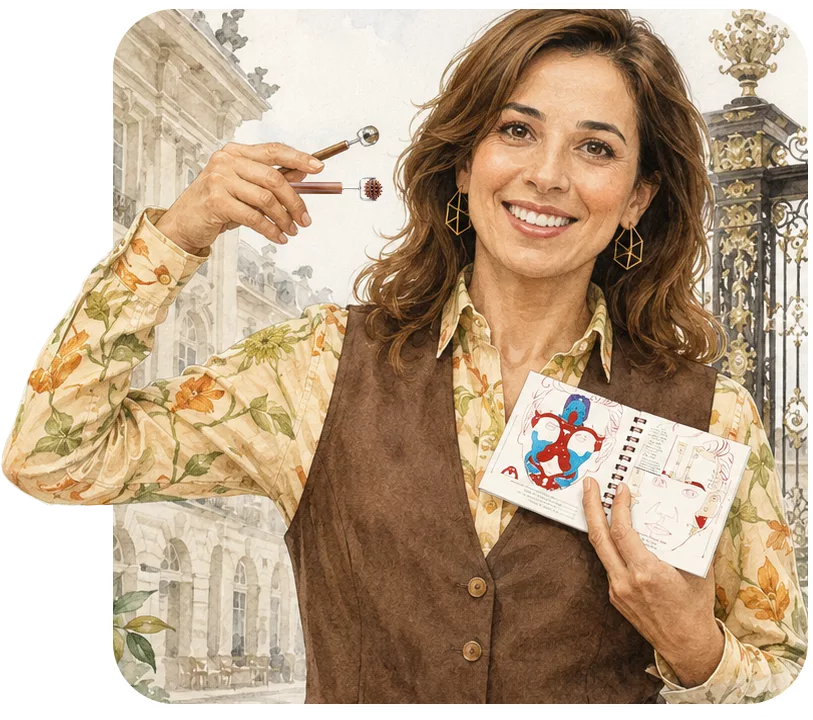
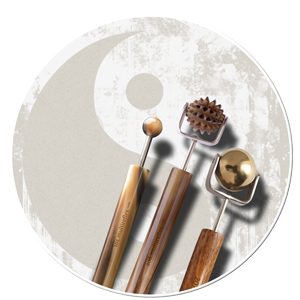
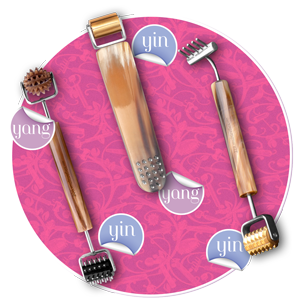
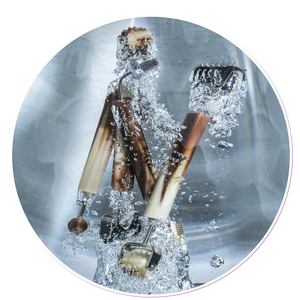
A multireflex tool is a facial and bodily reflexology instrument designed for Dien Chan. Each one produces a yin effect or a yang effect, which allows the motion to be adapted to the person's sensation. Our craftsmen have made them by hand since 2011, and their marbling makes every piece unique.
The tools are classified by series and keep the same reference number despite name changes and translations. We recommend saying «multireflex tool» to avoid any confusion with other massage instruments.
What multireflex tools are not
Multireflex tools are precision instruments for the practice of Dien Chan and Chan❜beauté. Shaped one by one in natural horn, mimosa wood, bamboo and metals, they are recognised by their unique marbling and their yin or yang effect.
Plastic imitations: a polluting material that risks disrupting the skin microbiome by generating static electricity.
Jade rollers or styluses of various shapes: these are not recommended, as they do not provide a yin or yang effect.
Needle-based utensils: they pierce the skin and irritate it, whereas horn spikes and soft mini-rod rollers never penetrate it.
Where to find genuine multireflex tools?

All authentic multireflex tools are available from DienShop, official supplier of the International School of Multireflexology - Dien Chan (ISMDC).
Imitations are in circulation and their appearance is easily deceptive, whereas every authentic multireflex tool is made piece by piece by our craftsmen since 2011, in natural horn, mimosa wood, bamboo and metals.
It keeps the same reference number despite name changes and translations.
Yin tools: cooling without heating
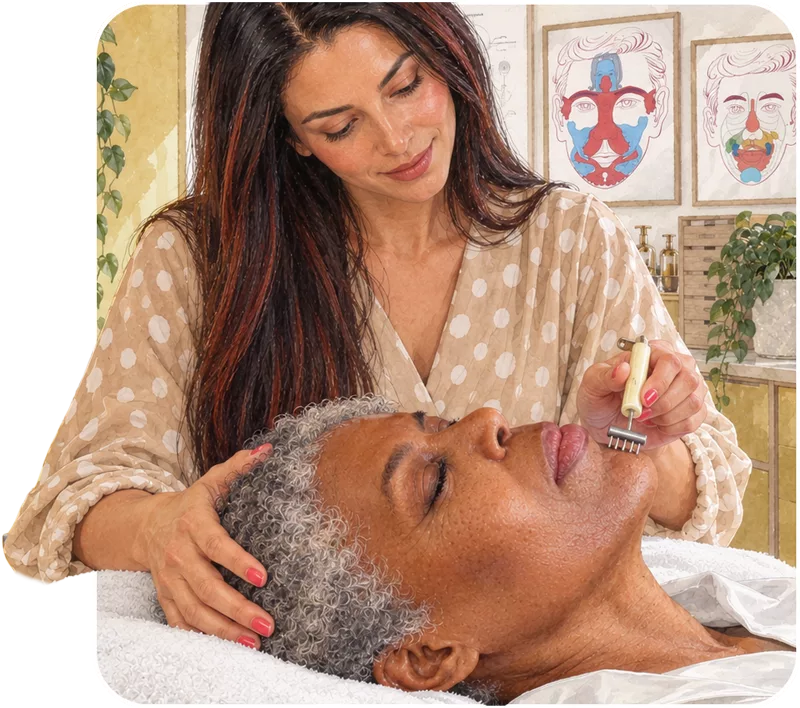
— The mini-rods cool and disperse concentrations or stagnations (melanin, blood, fluids) trapped in the skin tissue, without raising its temperature.
— The brass cylinders and spheres release accumulated heat and relax micro-tensions, whether from the facial reflex zone (thanks to the Dien Chan reflex diagrams) or directly on the body part concerned.
For reference, ice has a yin effect on first contact, but it ends up burning over time, whereas a yin roller or a brass tip cools while restarting the vital movements.
🌸 Chan❜secret yin: in Chan❜beauté, the yin effect hydrates, distributes the nutrients of the dermis, and smooths, soothes and firms the appearance of the skin.
The Double yin ball nº411: rolls over the shoulders and neck, without pressure.
The Yin rake nº416: relaxes the person as a whole.
On the scalp, 4 minutes minimum with a steady motion.The multireflex tool's mini-rake nº219: treats the reflex diagram zones in a yin way (calming, dispersing).
The Big yin-yang hammer nº430 (its rubber disc): relaxes the large muscles.
Yang tools: energising and warming
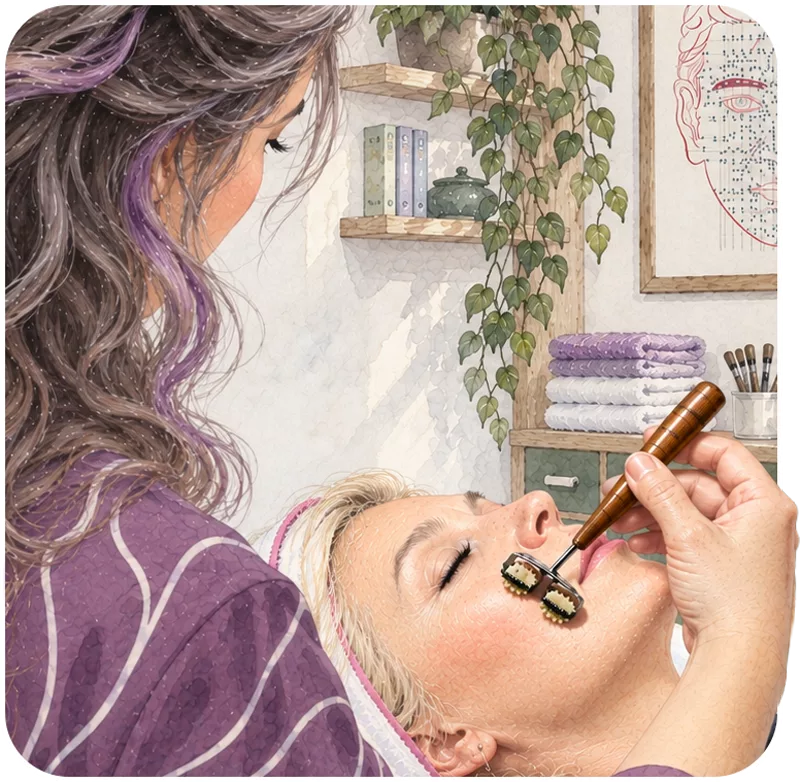
Their spike balls stimulate without ever penetrating the skin. For the handles of the facial tools and the yang spikes, we chose natural horn, far more eco-friendly than exotic woods.
This noble material is a mark of quality for its biological antiseptic properties.
Furthermore, and unlike plastic, horn does not generate static electricity that disrupts the skin microbiome. Its vibratory frequency is said to be in harmony with the body's energy circulation.
🌸 Chan❜secret yang: in Chan❜beauté, delicate yang back-and-forth movements mobilise the deep nutrients of the hypodermis. A yin tool then distributes them by repeating the motion for a few more minutes.
The Double yang ball nº410: hips, legs, back, without damaging the skin; for pain described as dull, deep or cold.
The Little yin-yang hammer nº128 (rubber tip): taps and stimulates the areas around a precise bqc·point.
How to choose between a yin tool and a yang tool?
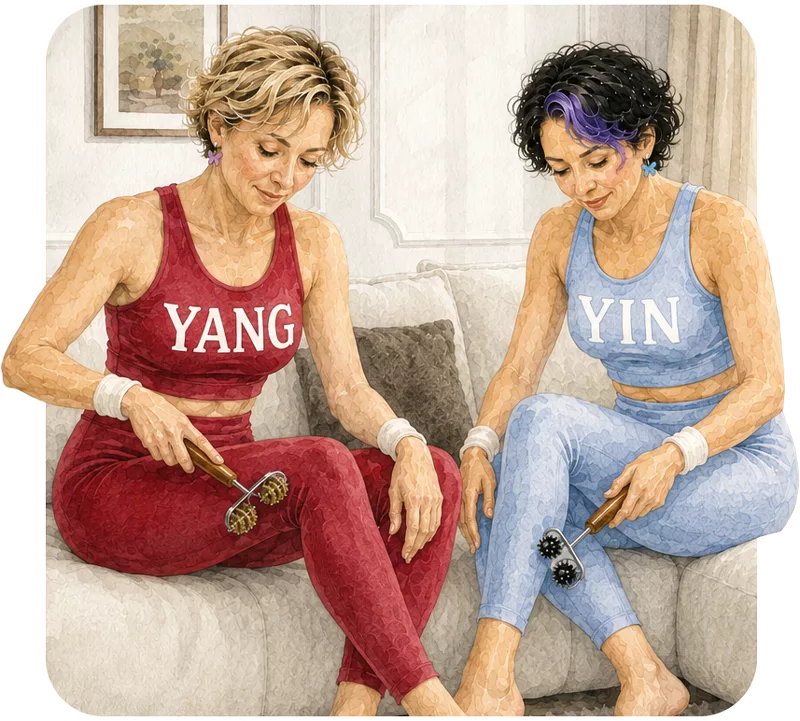
Without prior training, it is the sensation described that guides the choice.
Always ask whether the sensation is pleasant. This ongoing dialogue confirms the yin or yang effect to adopt next on the facial reflex zones.
Dull, cold, diffuse sensation, heaviness → yang tool.
We start with local stimulations using an instrument suited to the surface, for example the Double yang ball nº410 on hips, legs or back.
Warm, precise, sharp, stinging, concentrated sensation → yin tool.
On tense shoulders or a stiff neck, the Double yin ball nº411 rolls back and forth without pressure, which disperses tension and activates microcirculation without heating.
Giving a yin or yang meaning to your bqc·point formulas
If you have completed the DienChan❜pro module or use the Faceasit❜clinic app, you can give a yin or yang meaning to your bqc·point formulas.
The essential gesture
The gesture matters as much as the tool. A detector, even though it is metal, gives a yang effect when stimulating, and a yin effect when sweeping lightly. The Beauty ova gives a yang effect if the massage is vigorous, yin if the skin is stroked.
What gesture to adopt?
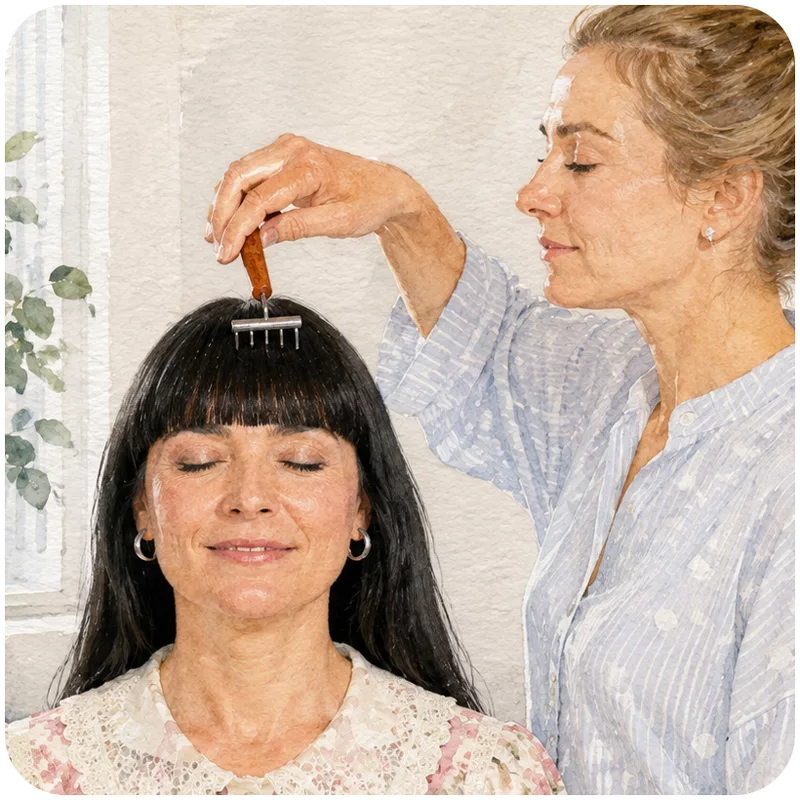
When you kindly ask someone for directions, you get the best answer. Our skin, our cells and our brain work the same way: they do not like to be attacked.
Gentle and harmonious: the more you press, the more effective it is, is a false idea.
Attentive to the sensations expressed by the person, or felt in self-care.
5 minutes maximum on the same surface: beyond that, the desired yin or yang effect is distorted.
The gesture of an artist: imagine the face as a master's canvas.
Your motion should resemble that of a painter (not a house painter) or a professional make-up artist.
Detecting a point: it is not the pressure that reacts

With the multireflex Detector nº101, we move towards the assumed position of the bqc·point being sought.
A facial expression from the person then guides us to its precise location. It is the point that is sensitive, not the pressure on the skin.
Detecting and then stimulating the points requires training from an experienced teacher, then practice.
The 5-step care plan
Knowing whether what we are addressing expresses itself in a rather yin or rather yang way allows us to structure personalised care. We must therefore know how to interpret the information gathered during the first steps of the care plan.
Here are the 5 steps of the Dien Chan care plan:
Stabilise the person's general state.
Determine whether a yin or yang effect is needed, testing as the work on the relevant body areas progresses.
Continue with the same effect on the facial areas of the reflex diagrams.
Consolidate with a suitable bqc·point formula.
Recommend a multireflex tool for self-care maintenance.
Local work: examples
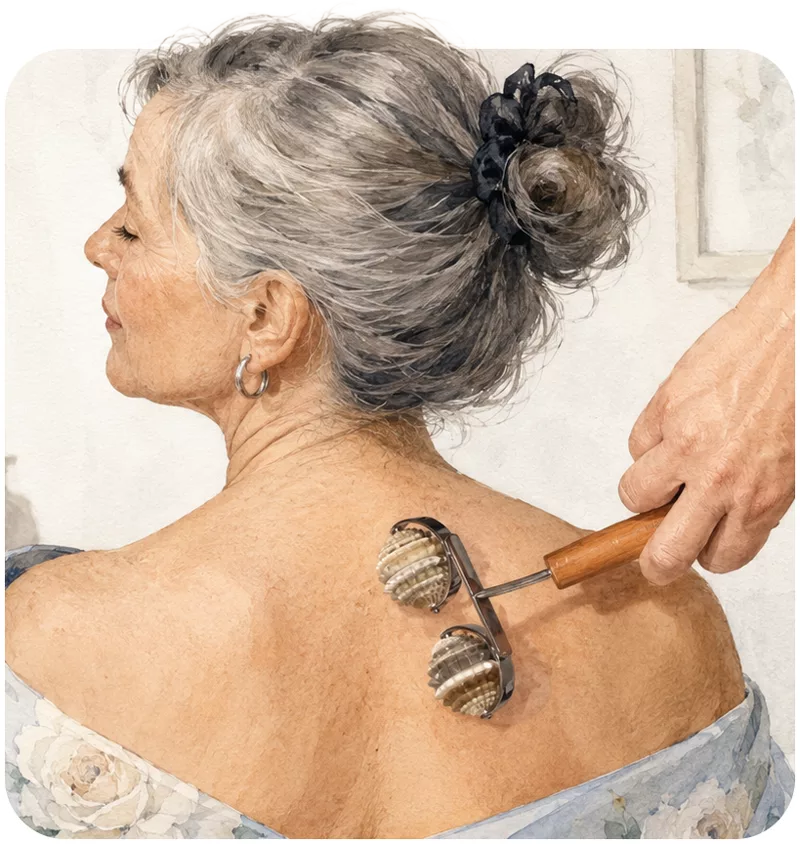
Local work consists of using a larger instrument directly on the body part concerned. It kickstarts the self-regulation process and prompts the brain to direct vital energy towards that area.
For example, for a tense neck, we start by checking whether the person prefers the Double yang ball nº410 or the Double yin ball nº411. Their description of the sensation guides us, but their feedback on the sensation is decisive.
After 3 minutes of massage, we move to step 3: the same effect, with a smaller instrument, on the reflex areas that represent the neck on the different diagrams.
How to use the Detector nº101 properly
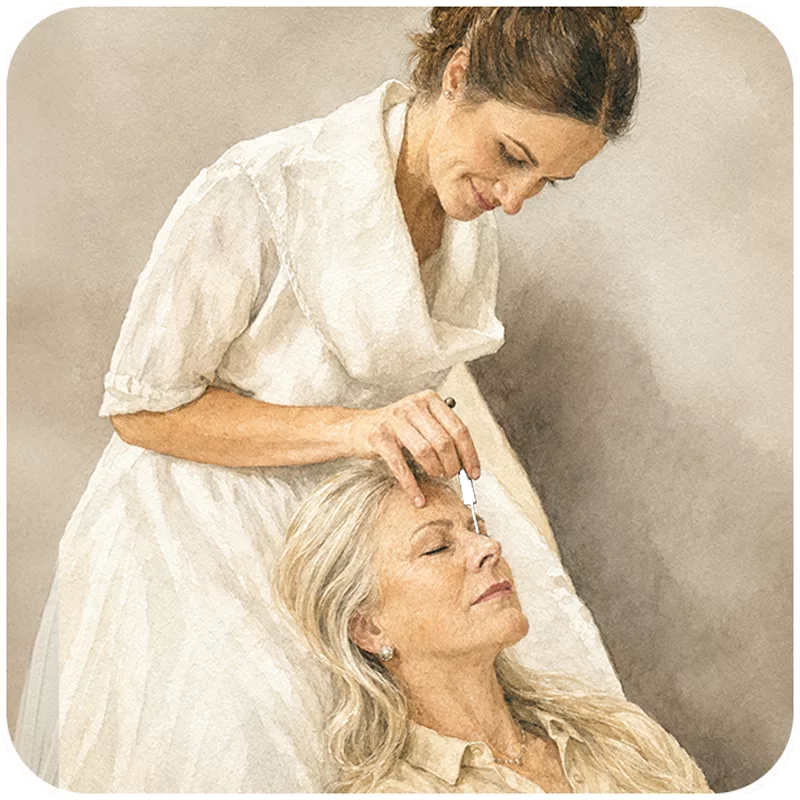
The Detector - smooth sphere nº101 is the essential Dien Chan tool for stimulating facial points and massaging reflex zones with precision and gentleness.
Compact and practical, this stylus is ideal for applying bqc·point formulas. It combines a fine rounded stainless steel rod with a smooth horn sphere.
It is aimed at those who already know how to stimulate bqc·points.
The Detector nº101 stylus: detect, then stimulate
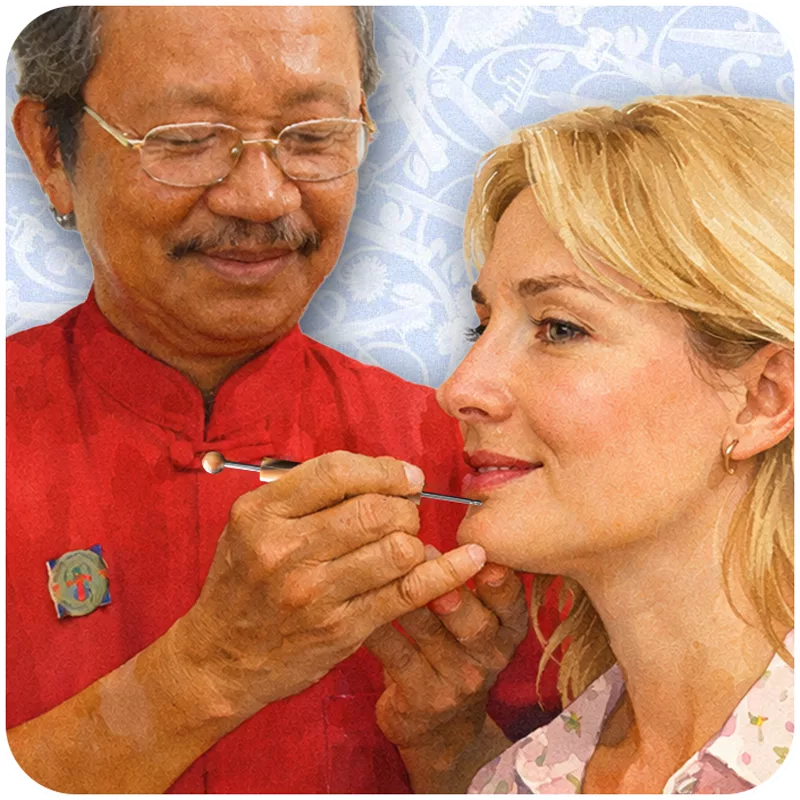
The Detector is needed for step nº4 of the care plan, to consolidate with a bqc·point formula.
Detect: assess the sensitivity of precise areas using the projection of the reflex diagrams.
Stimulate: apply constant pressure for 20 to 30 seconds on the detected point. Repeat, gradually adjusting the pressure according to the sensitivity of the face.
Sweep: light sweeping movements with the rod give a yin effect on the targeted reflex zone.
The Detector nº101 smooth sphere: preparing the face
For 1 to 2 minutes before the treatment, the small smooth horn ball allows us to relax the face with gentle massage on the areas concerned. It also allows a pleasant, deep massage of the shoulders' multireflexology zones.
Feel free to apply a small drop of oil to ease the friction.
The Little Hammer or the Comet Detector: when to prefer which?
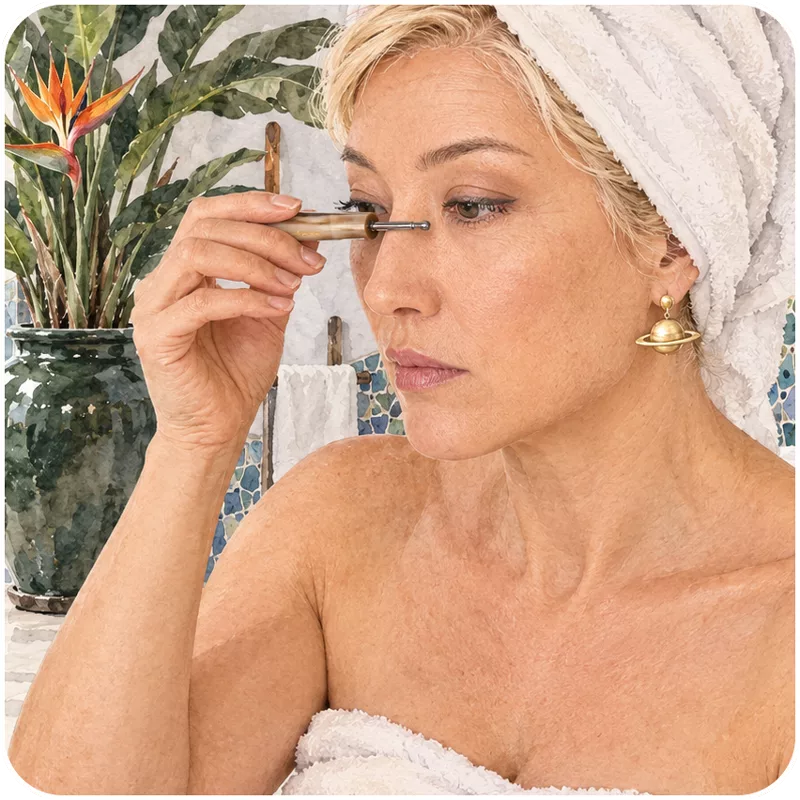
If the person cannot tolerate the Detector's fine tip, switch to the Little hammer nº128 or the Comet nº133 instead.
Experienced practitioners often combine these instruments with the Detector nº101 depending on the facial area to be treated.
The Little yin-yang hammer nº128: the beginner's choice, it allows tapping the areas described by the formulas.
The Comet nº133 (large detector): thicker, it suits very sensitive and delicate skin.
Three example areas
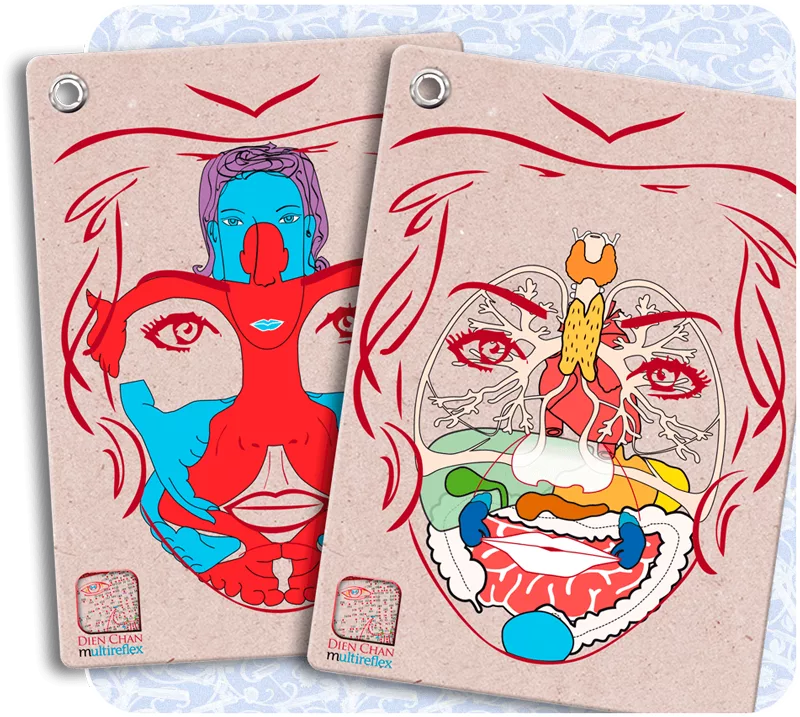
Stomach area: gently sweep the Detector nº101's rod along the left nostril's groove, until you find a small, very sensitive area. This is often bqc·point 64·, which is the most sensitive. Stimulate it for 30 to 40 seconds and check that the sensitivity has decreased.
Neck and shoulder tension: stimulate the neck's reflex zone, located between the eyebrows (around bqc·points 34·), using the Little hammer nº128. By gently tapping the area, you will find some points more sensitive than others.
Back: using the Comet nº133's large detector or the Detector nº101's smooth sphere, very gently massage the crown of the skull to locate the sensitive points.
Massage them for about a minute, then ask the person to assess how their sensation has changed.
Why not a pressure probe or a spring-loaded stylus?
Acupressure probes, acupuncture needles and spring-loaded styluses are not recommended in Dien Chan.
To control and feel the pressure applied, you need a quality instrument that insulates the hand. The multireflex Detector nº101 is the one we recommend: natural horn handle, stainless steel rod of a precise diameter, the result of many years of practical experience.
To detect bqc·points properly, practise on your own face in front of a mirror. The ideal remains training with an EiMDC-certified teacher, where you practise on real people.
But also for natural aesthetics
Chan❜beauté puts original facial reflexology to work for natural aesthetics. It uses the same multireflex tools as Dien Chan, with protocols specific to facial and body care.
Origin of Chan❜beauté
Chan❜beauté was developed by the research department of the International School of Multireflexology - Dien Chan (ISMDC). This natural aesthetics and holistic wellbeing technique seeks to restore overall balance in order to reach the source of an imperfection.
An avant-garde eco-friendly method, it reconciles principles of Eastern wisdom with contemporary applications.
Since 2002, we observed that the skin of people practising Dien Chan gained in radiance. Our beautician students began incorporating multireflex tools into their treatments and found that products applied after a yang tool penetrated better.
After years of observation and a reorganisation of our notes, ISMDC presented the method in 2006. We named it Chan❜beauté: chan, from Vietnamese, followed by beauté, French for beauty, for the glamorous touch our English-speaking students appreciate so much.
→ Discover the protocols on the official Chan❜beauté website
The principle: yang first, yin next
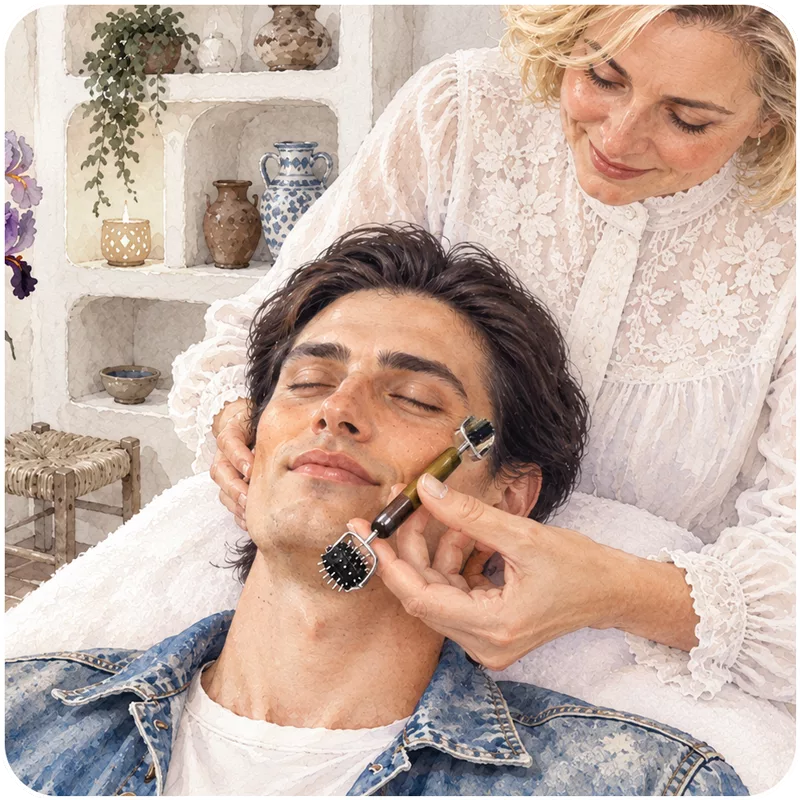
The skin of the face is close to the bone. With delicate back-and-forth movements, the horn yang spikes mobilise the nutrients trapped in the deep layers of the skin. Instead of trying to get water in along with the fatty molecules of a cream, we make use of our own natural resources.
So we start in a yang way to bring these nutrients to the surface. Then a yin tool, moving back and forth, distributes them through the epidermis to restore the skin's radiance and elasticity. This work also releases the tension in the muscles that mark the crease, which prepares the ground for the rest of the treatment.
Chan❜beauté's favourite tools
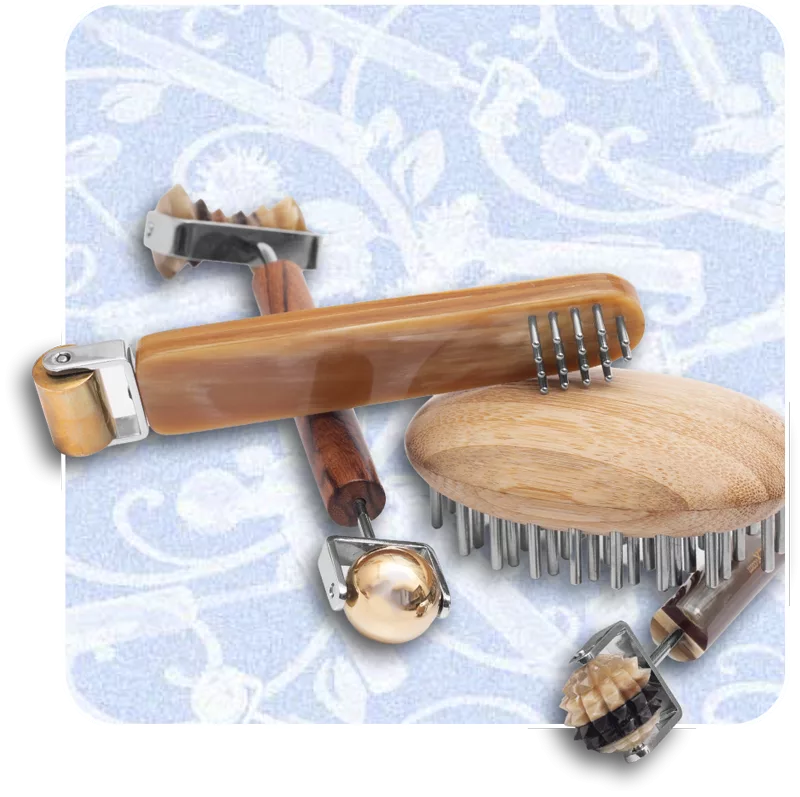
Chan❜beauté combines the effects of several multireflex tools, yang then yin. Here are our favourites for facial care. The body tools complete the range for protocols that also involve other parts of the body.
The Yin-yang roller nº206: the tool of the «Prélude Yang~yin», with its yin roller and its small yang spike ball.
The Double mini yang ball and the Double mini yin roller: the same principle over the whole face, in a few minutes.
— The Double mini yang ball nº307 for yang stimulation.
— The Double mini yin roller nº308 for distributing.The Beauty-brush nº252: for facial areas with thin, delicate skin.
The Concave yang - yin sphere nº207: for redefining contours and soothing tension around the eyes.
The Beauty ova nº373: for a wide range of facial and body treatments.
The Little yin-yang hammer nº128: for applying the bqc·point formulas that consolidate treatments.
Handcrafted, eco-responsible manufacturing
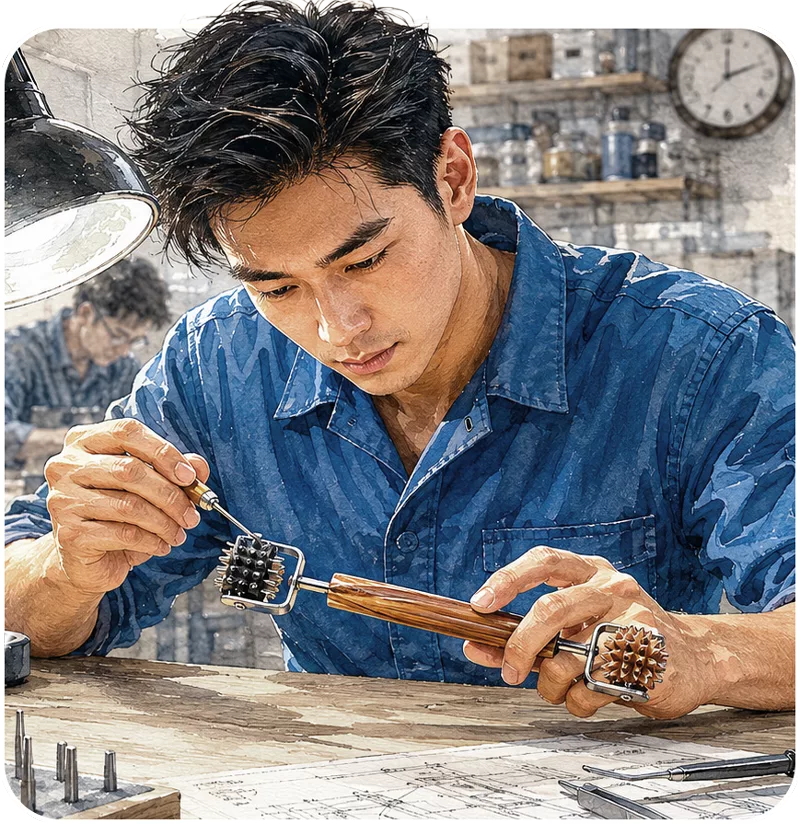
Instruments of elegance and precision, multireflex tools are made piece by piece by our craftsmen, following a tradition we have upheld since 2011.
Each one is meticulously carved to fit the contours of the face and body. Its marbling and tones make it a unique piece, which personalises your skill and expresses your individuality.
Horn is a natural material, more eco-friendly and more respectful of animal welfare: no animal is raised or harmed for it. On the skin, the difference is felt immediately.
Here is why we chose horn, wood and metals, and how to recognise a genuine piece.
Noble materials
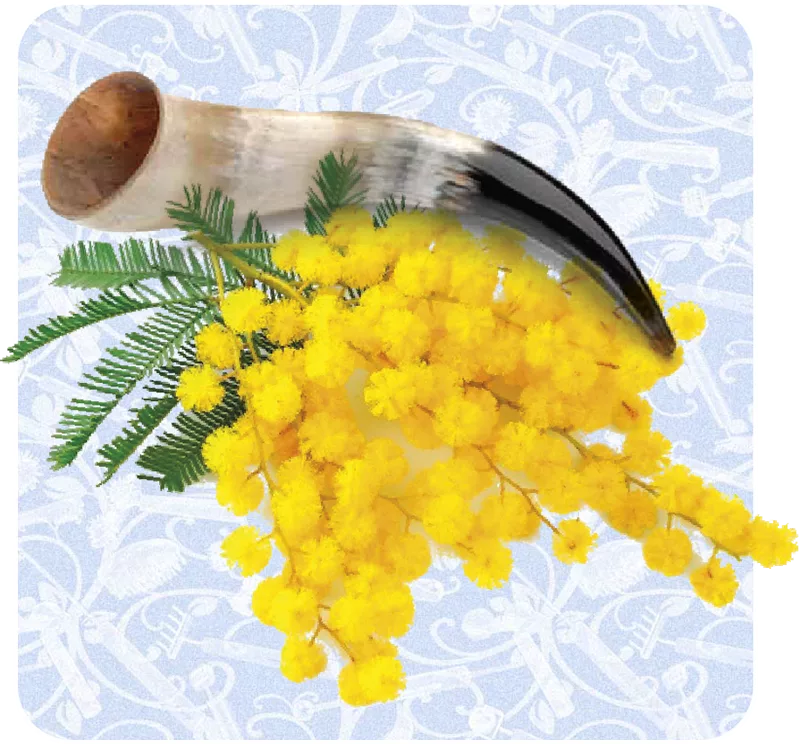
Many massage instruments are made of plastic or varnished wood. We chose a different path: natural horn, more eco-friendly, more respectful of animal welfare and with a nobility that industrial materials lack.
Chosen and carved piece by piece by our craftsmen, it makes every multireflex tool an exceptional instrument.
Natural horn: handles of the facial tools and yang spike balls. We source it from the traditional agricultural supply chain, after the peaceful life of grazing livestock. No animal is raised or harmed for its horns, which would otherwise end up as fertiliser. It is far more eco-friendly than exotic woods, which encourage deforestation, and it does not generate static electricity, unlike plastic.
Mimosa wood: a noble wood said to have antispasmodic properties.
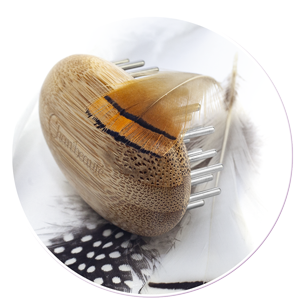
Bamboo: we chose it for the Beauty ova nº373 so that it is unbreakable and does not slip when oils are used.
Brass (the «yin copper»): golden cylinders and spheres with a yin effect.
Stainless steel: the Detector's rod, of a precise diameter, and the many silver-toned metal parts that make up our multireflex tools.
Horn or plastic: how to tell them apart?
Plastic is a polluting material. An estimated 8 million tonnes of plastic waste are dumped into the oceans every year, and this plastic breaks down into particles that enter the food chain. It also generates static electricity, which disrupts the skin microbiome.
Jade rollers are neither yin nor yang, they have no defined effect and therefore do not allow the motion to be adapted to the person.
Far more beautiful, Dien Chan tools made from living materials offer a feel that plastic cannot match. Above all, we could not offer a natural method while using instruments that push industry to manufacture more synthetic material.
The safest option remains buying from DienShop, where every multireflex tool is authentic.
Because genuine horn is more expensive, here are some simple pointers:
Light: held up to a light source, fine horn lets through a translucent glow and reveals irregular fibres, whereas plastic patterns repeat.
Touch: horn warms up quickly in the hand, stays silky and does not attract dust.
Smell: when heated by polishing or friction, horn gives off a protein smell, close to that of hair or nails.
The hot needle: on a hidden area, a heated needle gives off a burnt-hair smell in horn, whereas plastic melts and smells of chemicals. This test marks the tool, so reserve it for doubtful pieces.
Natural horn
The handles of the facial tools and the yang spike balls.
We source it from the traditional agricultural supply chain, after the peaceful life of grazing livestock. No animal is raised or harmed for its horns, which would otherwise end up as fertiliser.
It is far more eco-friendly than exotic woods, which encourage deforestation, and does not generate static electricity, unlike plastic.
A silky touch: naturally coated with a protein matrix, horn glides over the skin with a fluidity that plastic's polymer chains cannot match, never irritating the epidermis.
No static electricity: plastics and many cold or synthetic materials generate static electricity that disrupts the skin microbiome.
Horn, on the other hand, offers a warm, pure and pleasant sensation.A delicate polish: the natural surface of horn stays beautiful without a synthetic coating, whereas varnished wood ends up flaking.
A living material: renowned for its natural antiseptic properties, horn also has, in our experience, a vibratory frequency in tune with that of the body's flows.
It works with the body, not against it!A unique beauty: its natural colour variations and its silky, mottled touch exist in a single specimen.
Every multireflex tool is a true health treasure, an exceptional piece for your hand.
Recycled packaging and PDF booklets
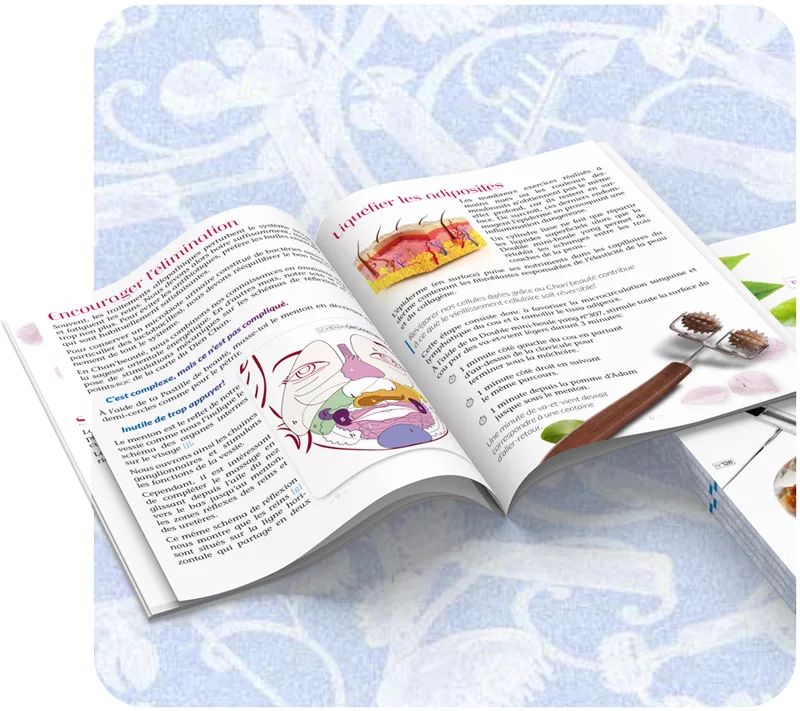
Since 2002, we have been reusing boxes destined for the bin to send your parcels. Many of you have complimented us on receiving your tools wrapped in newspaper and a cereal box. This allows us to be genuinely eco-responsible and keep fair prices. We are also in touch with shops to recover their cardboard.
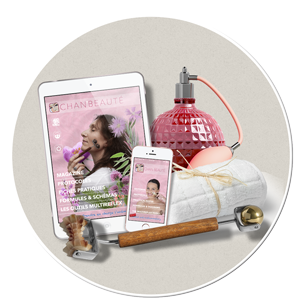
Our booklets are published only in PDF, so you can read them on the screen of your choice. We wanted to print a book on Chan❜beauté, but the ecological and economic cost penalised our readers. The interactive magazine (the Chan❜beauté app) was born from this choice and receives free updates.
Digital publications also have the advantage of being enriched with interactive links to other content and videos, which illustrate the Dien Chan movements far better.
Today, we continue to avoid plastic and are working on new prototypes, without ever sacrificing quality: our tools remain handcrafted and durable.
Are multireflex tools made of plastic?
No. They are made of natural horn, mimosa wood, bamboo, brass and stainless steel. We advise against plastic utensils.
Is an animal raised for its horns?
No. We source the horns from the traditional agricultural supply chain, before they would otherwise go to fertiliser.
How to recognise a genuine multireflex tool?
By its reference number, its unique marbling and its origin: all genuine multireflex tools are available from DienShop, official supplier of ISMDC.
Classifying multireflex tools: choosing your series
Multireflex tools are classified by series, which makes it easier to put together your kit. Their reference number stays the same despite name changes and translations: always go by the number.
▸ The ⊶100⊷ series for precisely detecting and stimulating bqc·points:
Smooth sphere Detector nº101, Yang ball Detector nº103, Comet Detector nº133, Little yin-yang hammer nº128.▸ The ⊶200⊷ series for tools with two complementary-effect tips:
Yin-yang roller nº206, Concave yang - yin sphere nº207, Toothed yin mini-rake cylinder nº219, Beauty-brush nº252.▸ The ⊶300⊷ series for instruments usable on both the face and the body:
Double softness nº302, Double mini yang ball nº307, Double mini yin roller nº308, Bamboo beauty ova nº373.▸ The ⊶400⊷ series for body multireflex tools:
Double yang ball nº410, Double yin ball nº411, Big yin rake nº416, Horn massage stick nº424, Big yin-yang hammer nº430, Yang health ball nº432, Yin health ball nº433, Triple yang roller nº438.▸ The ⊶500⊷ series for all the kits:
Explained treatment kits bring together the self-care tools; discover them at DienShop.▸ The ⊶600⊷ series for consumables:
Pack of 10 solid moxa sticks nº642, Envelope of heating patch sheets nº644.▸ The ⊶700⊷ series for educational PDF documents:
booklets, treatment cards.▸ The ⊶800⊷ series for our interactive apps:
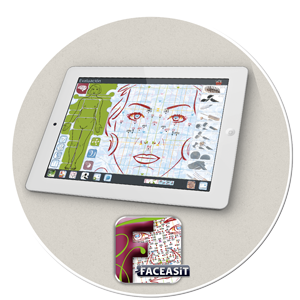
Dien Chan's Faceasit app, the Chan❜beauté app.→ The apps
▸ The ⊶900⊷ series for printed materials:
The set of 3 Dien Chan posters nº908, the Spanish-language book nº931, the English-language book nº932, the Minibook nº939.
Which tools for your profile?
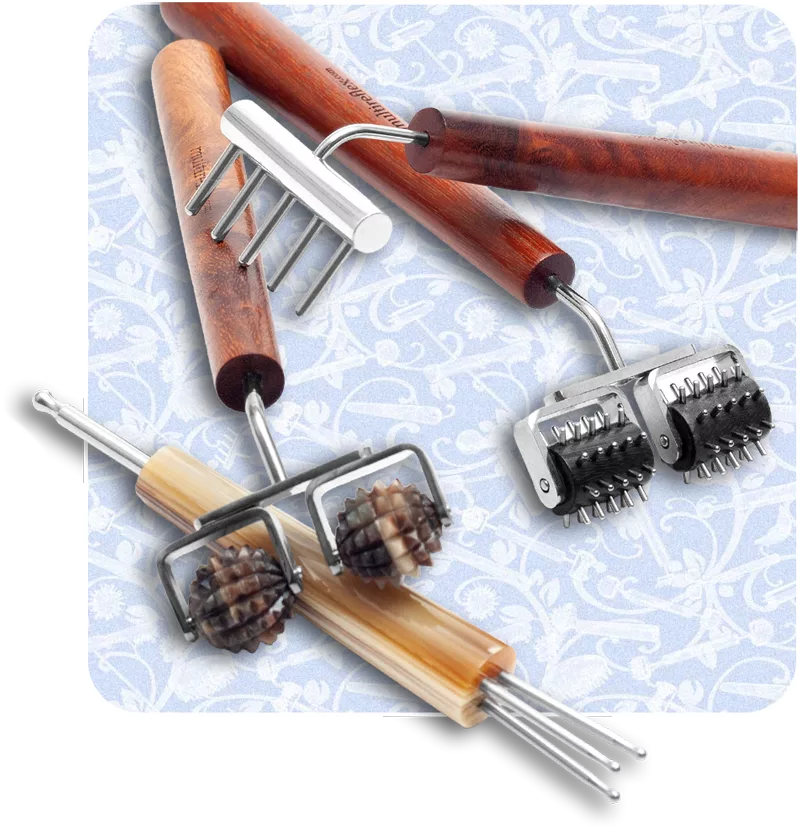
There's no need to buy everything at once. Here are the tools to prioritise for putting together your kit, depending on whether you are a beginner, work as a professional or practise self-care.
Beginner: start with at least two multireflex tools, the Yin-yang roller nº206 and the Little hammer nº128 for applying bqc·point formulas.
The Comet nº133 suits thin, sensitive skin.With the free «Prélude Yang~yin» booklet, you can start with Dien Chan and Chan❜beauté.
Professional: the Detector nº101, the nº307 and nº308 duo, and the Comet for Reflex Drainage.
The «Reflex Drainage» booklet is also free, as this protocol is very important for starting or finishing a session.Self-care: the Big yin rake nº416, the Little hammer nº128 and, for everyday touch-ups, the Beauty-brush nº252.
Explained treatment kits bring together the self-care tools; discover them at DienShop.
How to look after your multireflex tools
With a little care, your tools last for years: some of ours are over 10 years old. Three actions are enough: oiling the axles, cleaning, restoring the shine.
Oil the axles if the tool squeaks
With use, some instruments squeak a little. To avoid this nuisance, a drop of vegetable oil on their axles is enough.
Put a drop of vegetable oil on your finger.
Apply it to each end of the axle that holds the ball or roller.
To get between the balls that are too close together on some body models, use a cotton swab soaked in oil to lubricate both axles more easily.
Cleaning your tools
After each use, we recommend washing multireflex tools with warm soapy water, for good hygiene.
It is mainly the stainless steel instruments that need cleaning between each person, since horn and brass have natural antibacterial properties that allow for a simple rinse.
This is usually enough.
Brush them with water and soap, or with a mild alcohol solution.
Soak the tips that come into direct contact with the skin in a diluted alcohol solution, or in a water and bicarbonate solution.
For a person with very oily skin, roll the tool over a disinfectant wipe.
Restoring the shine of your tools
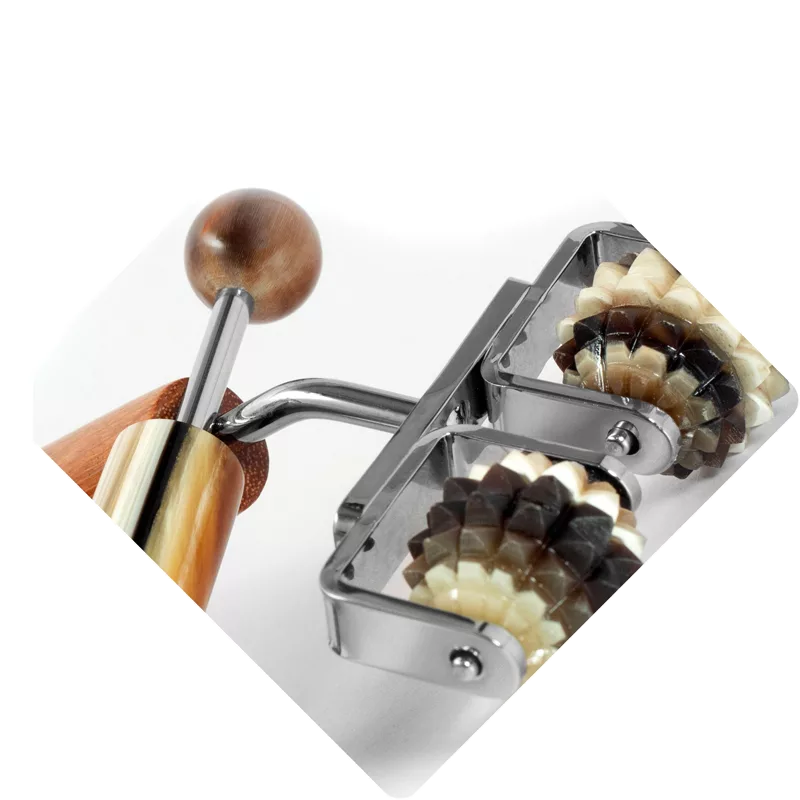
Avoid overly harsh products on horn: it would dry out to the point of cracking. Also avoid strong alcohol solutions and liquids that are too hot, as warm soapy water is usually enough. Finally, do not use heating disinfection devices: they can deform your tools.
— Brass (the «yin copper») can lose its shine over time. Soak it for a few hours in a dilution of water and bicarbonate of soda, then brush it with a few drops of fresh lemon to restore its natural golden splendour.
— Horn can also dull and crack.
Chan❜secret: some of my tools are over 10 years old and had lost a little of their shine. I ventured to coat the horn with a diluted essential oil whose scent I like, and the result pleasantly surprised me. The horn is less cracked and has regained its lustre.
Each instrument has a full tips fact sheet. Type its number followed by «.multireflex» into your browser.
For example, for the Double yang ball nº410, 410.multireflex.com
A gift to get you started
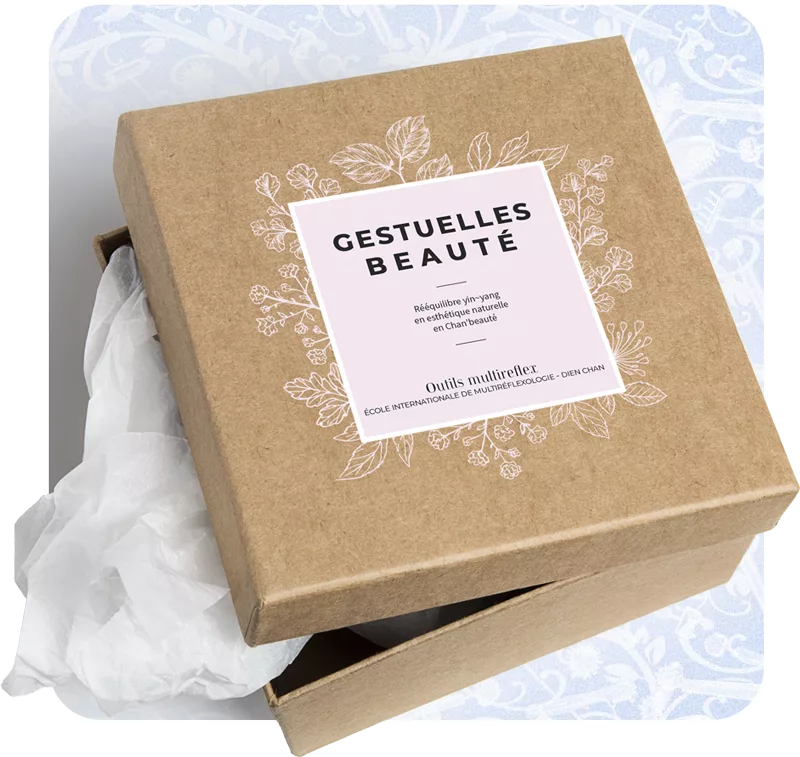
Two gifts to start off well: the «Prélude Yang~yin» booklet for the face, and an «AntiStress» treatment to relax the nervous system.
The «Prélude Yang~yin», a well-kept secret
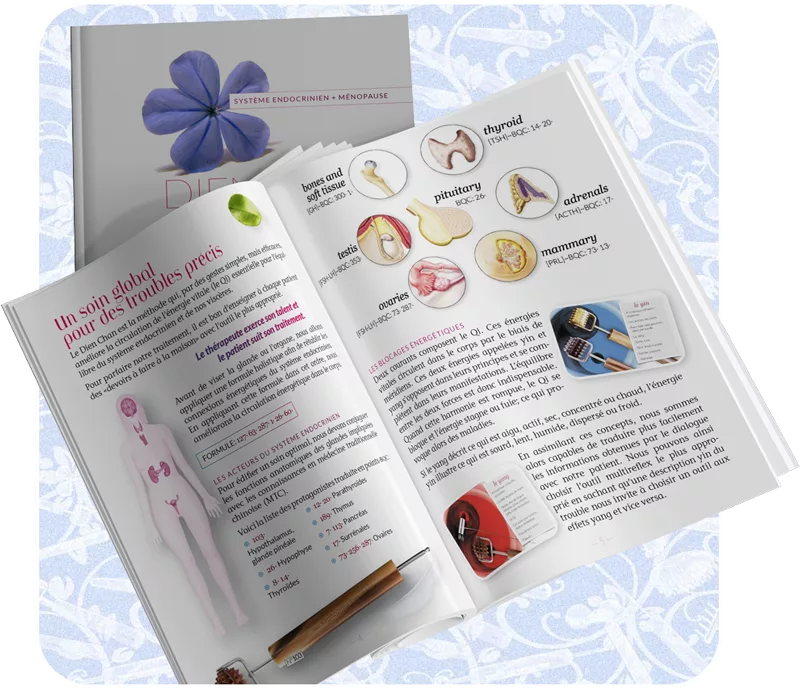
Yin cannot exist without yang, and vice versa. Since 2002, we have observed that yang stimulations followed by precise yin work activate the exchanges between the dermis, the hypodermis and the epidermis.
To understand why, let's recall that the skin is made up of three layers. The epidermis, on the surface, renews itself in about a month, and more slowly with age. The dermis, just beneath it, contains the collagen and elastin that give it firmness and suppleness. The hypodermis, deeper down, is a tissue rich in vessels that supports the whole. Over time, the exchanges between these layers slow down. A cream nourishes the surface, but its active ingredients struggle to cross the stratum corneum: without active circulation, the deep layers remain under-stimulated.
So we start with a yang effect that brings the nutrients from the deep layers to the surface, then a yin tool distributes them over the whole skin. The yang motion, with horn spikes that never penetrate the skin, stimulates local microcirculation. The yin motion, with rounded-tip mini-rods, then distributes them without heating. The skin thus regains radiance and elasticity, and your best day cream finds skin prepared to welcome it.
This protocol is the result of more than twenty years of observation with our beautician students. It belongs to natural aesthetics and wellbeing.
It is neither acupuncture nor Chinese medicine: Chan❜beauté is ultra-respectful of the skin and cossets the microbiome. No needles, no excessive pressure; the movements are gentle and the tools are made of natural materials, without plastic.
The Prélude Yang~yin booklet is free. Easy to read, it clarifies the concepts of yin and yang in a practical way and details the yang~yin harmonic, whose video shows you the movements step by step. You will see that Chan❜beauté is grounded in common sense, and that well-applied movements are pleasant and effective.
This is the protocol our beautician students practise at the start of a treatment, to work the whole face in a few minutes and prepare the skin before products:
The Double mini yang ball nº307: overall yang stimulation.
The Double mini yin roller nº308: distributes the nutrients mobilised by the yang effect.
The Reflex Drainage protocol with the Comet: stimulates the lymphatic system.
The «AntiStress in Dien Chan» treatment
In modern life, it is easy to neglect your own wellbeing. Stress builds up and emotions get stuck. Taking time for yourself, relaxing and learning to let go is essential.
When we are stressed, the body goes on alert: the autonomic nervous system speeds up the heart and breathing, and the muscles tighten, especially in the neck, shoulders, jaw and forehead. If this state continues, fatigue and tension set in. Calming the nervous system means helping the body move from alert mode to rest mode.
This system is made up of three parts that work together: central, peripheral and autonomic. It regulates the organs' functions and our emotions. Dien Chan relies on the reflex zones of the skull and face to stimulate it gently.
This protocol, discovered by Prof. Châu, the creator of Dien Chan, quickly relaxes the nervous system with gentle stimulations. It follows three short steps: relaxing the skull, stimulating a facial bqc·point formula, then targeting the lingering emotion. At each step, you ask the person how they feel before continuing; it is this dialogue that allows the treatment to be adapted.
Dien Chan is an evolving method that allows the treatment to be personalised, but it is learned progressively, with a serious structure that has experience and numerous publications. Since 2002, the International School of Multireflexology - Dien Chan (ISMDC) has been teaching the method; more than six thousand students have trained with it. In training, you learn to refine your movements to achieve more subtle effects, and to personalise the treatment for each person.
This protocol is a wonderful way in.
The 3 steps of the «Antistress» protocol
To find the sensitive areas with the Little hammer nº128, tap about fifty times on each region shown on the diagram; there's no need to tap hard.
With a detector, use a mirror and guide yourself by the lines that follow the contours marked by small coloured triangles.
If the person feels better, the treatment is working. Advise them to tap the sensitive points on the forehead with the Little hammer nº128, especially in the evening.
The skull: gently rake the scalp for 2 to 3 minutes with the Big yin rake nº416.
Ask how the person feels; normally, they will feel calm. If not, continue for 3 more minutes, not forgetting the sides.The face: stimulate bqc·points for 1 minute each with the yang side of the Little yin-yang hammer nº128.
The basic formula is 124· 34· 103·.The emotion: identify the repressed emotion linked to the stress.
Refer to the emotions chart and the facial organ diagram, then stimulate the reflex zones and bqc·points of the relevant element with the Yang ball Detector nº103.
Self-care
The Big yin rake nº416: rake the scalp gently for about 4 minutes to relax the nervous system.
The Little hammer nº128: tap the forehead's reflex zones every evening.
The Yin health ball nº433: roll it between your hands during the day, whenever a situation stresses you.