Relieve cervical, dorsal and lumbar pain
The back
Before any targeted stimulation, always begin by sending a message of muscular relaxation to the brain.
This is the key step that determines the effectiveness of the entire protocol to come.
Recommended tools
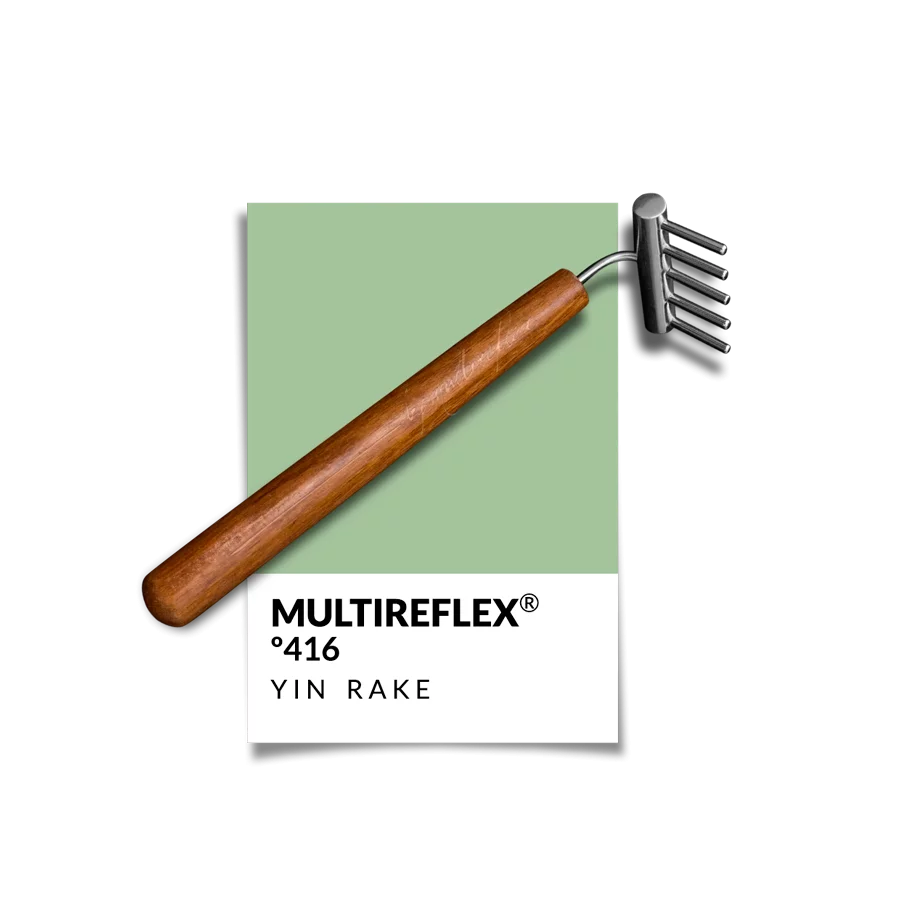
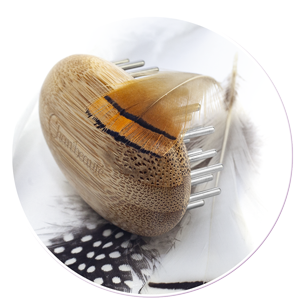
Yin rake nº416
Before addressing painful areas, it is essential to calm the nervous system. A stressed body is a body that resists. A calm body is a body that receives.
The Yin rake is the ideal tool for this first step. Its teeth glide in gentle sweeps across the skull, rapidly slowing cerebral activity and inviting the person to let go. Just a few passes are sufficient to feel the shoulders drop and the neck relax.
This preliminary gesture is not a luxury. It prepares the nervous system to fully receive the multireflexological treatment that follows and increases its effectiveness tenfold.
The reference stress-relief tool that every practitioner should have at hand.
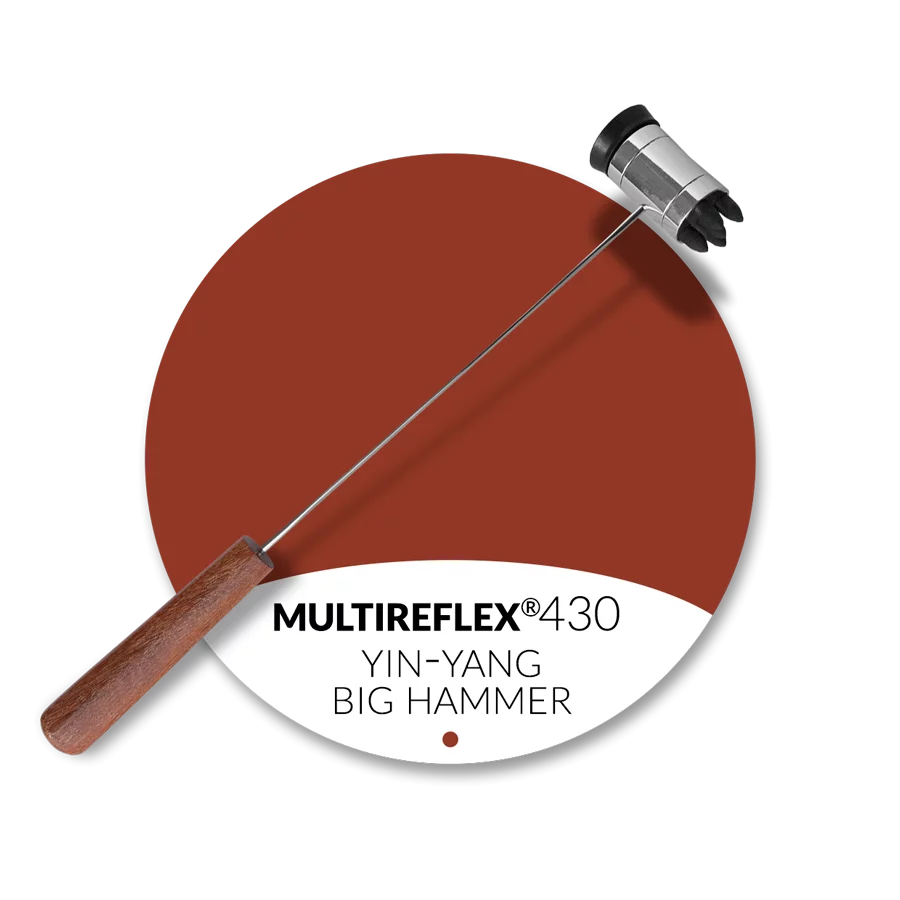
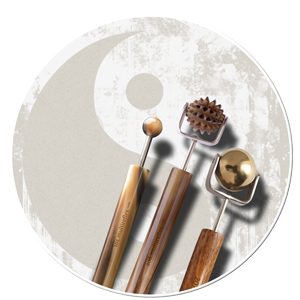
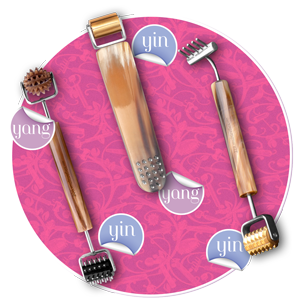
Great-hammer Yin-yang nº430
Move to the body step. The Great-hammer is perfectly designed to work large areas (shoulders, hips, paraspinal muscles) with remarkable efficiency. However, be careful never to tap directly on the vertebrae.
Begin with the cup side and apply about fifty gentle percussions to the painful areas. This action brings out deep nutrients, difficult to reach in large muscle masses, and unblocks vital energy along the meridians.
Finish with about ten percussions from the rubber-spined side to harmoniously distribute what has just been mobilised and relax muscles contracted by pain.
Two complementary effects for mobilisation and then soothing. Tensions release, circulation is restored, the back breathes again.
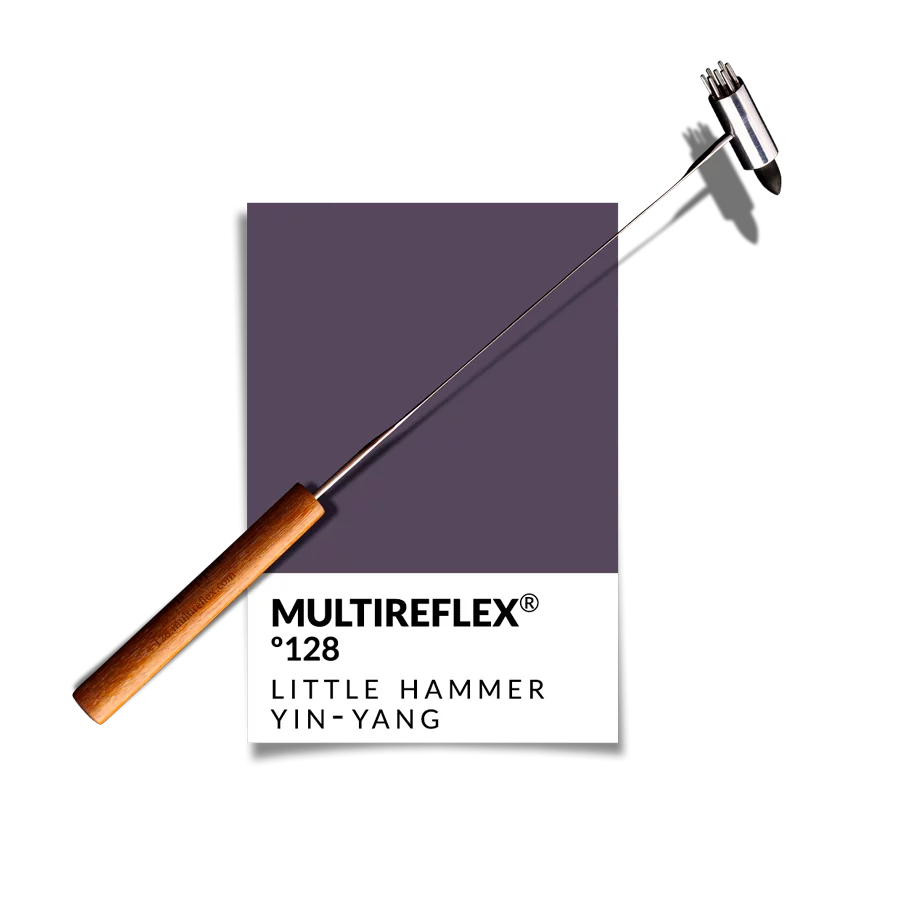
The Little-hammer Yin-yang
To close the protocol, move to the facial reflex step. Using the rubber end, gently tap the bqc·points of the basic formula 34· 65· 37· 38· 0· whilst adjusting the pressure to your current sensitivity.
If your lower back is particularly tense, return several times to the nasolabial fold and the bqc·point 38· until you feel the tension gradually release.
In self-care, the bqc·point 300· (located at the intersection of the vertical line from the iris and the first quarter of the forehead) is your best daily ally. Easy to locate, always accessible, remarkably effective for preventing muscle contractures and relieving back fatigue before it becomes established.
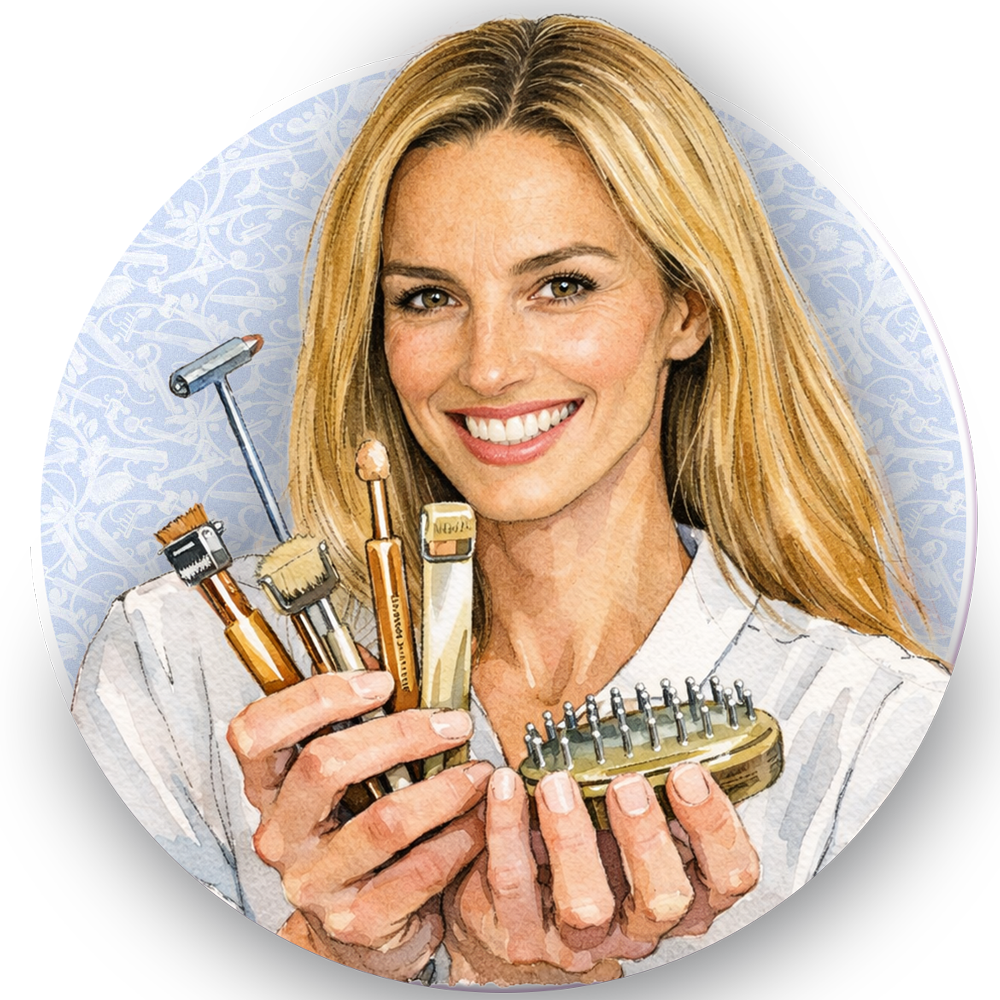
Designed specifically for self-care, the Little-hammer is far more precise than a simple pen for stimulating the points of Dien Chan formulae. Perfectly balanced in hand, discreet and portable, it accompanies you everywhere to care for yourself exactly when you need it.
Complementary booklet

Mucular tension nº702
Understanding the nature of these tensions and knowing how to treat them effectively is essential for maintaining overall well-being and improving quality of life.
Additional tips
Back pain has many origins and some require medical advice or osteopathic follow-up.
In case of intense, persistent or unexplained pain, always consult a healthcare professional before starting a self-treatment protocol.
Dien Chan works effectively on pain linked to energy blockages and muscle tension. This is precisely where it excels, gently and without side effects.
This protocol unfolds in three complementary stages, one per multireflex tool, for progressive and lasting relief of the back as a whole (cervical, thoracic and lumbar).
Frequently asked questions
Can Dien Chan relieve a herniated disc or sciatica?
Dien Chan can alleviate the pain and muscle contractions associated with a herniated disc or sciatica, by acting on the nervous system and compensatory muscle tension. It does not treat the anatomical cause (disc displacement). Always combine with the prescribed medical and physiotherapy follow-up. The best results are achieved as a complement to comprehensive treatment.
How often should this protocol be practised?
For acute pain: 2 sessions per day until relief, then daily sessions for prevention. For chronic pain: 3 to 5 sessions per week with daily self-care of bqc·point 300. Progress is generally noticeable from the 2nd or 3rd session if the protocol is combined with gentle movement (walking, light stretching).